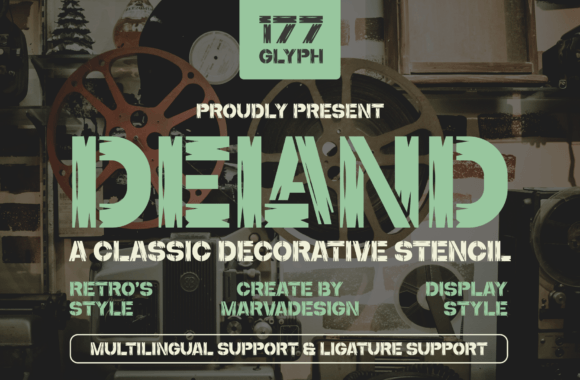
Deland: A Classic Stencil Typeface for Web Design
Deland is a classic decorative stencil font that brings a refined, vintage aesthetic to digital interfaces, making it an essential tool for web designers seeking to elevate brand identity through Fonts. Unlike standard industrial stencils that often feel rugged or utilitarian, Deland offers a sophisticated interpretation of the style, perfect for creating high-conversion landing pages and memorable online store banners. As a UI designer, you understand that typography is not just about readability; it is about setting the emotional tone of a user’s journey. This typeface bridges the gap between nostalgic charm and modern digital clarity, allowing you to craft unique visual hierarchies that capture attention without sacrificing professionalism.
Using Deland for Vintage-Inspired Hero Sections
When implementing Deland in hero sections, you leverage its status as a premium Decorative display font to immediately establish brand personality. The stencil cutouts create natural negative space, which helps the text breathe against complex background images or solid color blocks commonly used in modern web design. For creative portfolios or boutique online stores, using Deland for the main headline creates an instant connection with audiences who appreciate artisanal quality and heritage aesthetics. The key to success here is scale; because Deland has intricate details, it performs best at larger sizes where the stencil gaps are clearly visible. This ensures that the "fancier" aspect of the design shines through, distinguishing your project from generic sans serif competitors. By anchoring your hero section with this distinctive typeface, you guide the user’s eye naturally toward the call-to-action, enhancing the overall scanning behavior and engagement metrics of the page.
Optimizing Deland for Mobile Responsiveness and Readability
Integrating Deland into responsive layouts requires careful attention to mobile usability, as decorative Fonts can sometimes lose legibility on smaller screens. To maintain visual hierarchy on smartphones and tablets, avoid using Deland for body copy or long paragraphs; instead, restrict its use to short phrases, subheadings, or logo elements. When scaling down for mobile views, increase the letter-spacing slightly to prevent the stencil breaks from merging visually, which can cause rendering issues on lower-resolution displays. This practical adjustment ensures that the vintage touch remains crisp and recognizable, preserving the brand’s professional appearance across all devices. Furthermore, when placing Deland over image overlays, ensure high contrast by using solid white or dark text shadows if necessary, though the font’s inherent boldness often allows it to stand out effectively against muted backgrounds. This approach supports a consistent online identity, ensuring that the user experience remains seamless whether they are browsing on a desktop or a handheld device.
Strategic Font Pairing for Digital Brand Kits
Creating a cohesive digital brand kit with Deland involves pairing this classic decorative stencil font with complementary typefaces that enhance readability and balance. Since Deland serves as a strong display font, it pairs exceptionally well with clean, neutral sans serif fonts for body copy, such as Inter, Roboto, or Open Sans. This combination allows the decorative elements of Deland to take center stage in headers and buttons while ensuring that informational content remains easy to scan and digest. For a more editorial or luxury feel, consider pairing Deland with a refined serif font for pull quotes or secondary headings, creating a sophisticated contrast that appeals to high-end markets. This strategic pairing is crucial for maintaining visual rhythm in long-form content, such as blog graphics or course sales pages, where user retention depends on comfortable reading experiences. By balancing the ornate nature of Deland with minimalist supporting fonts, you create a harmonious layout that feels both intentional and polished, reinforcing trust and professionalism in your web design.
Enhancing Conversion Rates with Deland in CTAs
Utilizing Deland in call-to-action areas can significantly impact conversion rates by adding a unique visual hook to critical interaction points. As a distinctive entry among decorative Fonts, Deland draws the eye to buttons and limited-time offer banners, making them stand out in crowded landing page layouts. However, brevity is essential; use Deland for short, punchy CTA text like "Shop Now," "Join Us," or "Get Access," rather than lengthy instructions. The vintage aesthetic evokes a sense of exclusivity and craftsmanship, which can psychologically prime users to perceive the offered product or service as higher value. When designing these elements, ensure that the button padding is generous enough to accommodate the font’s unique character shapes, preventing any visual clutter. This attention to detail signals quality to the user, fostering brand trust and encouraging clicks. Whether you are designing a SaaS founder’s pitch deck or an e-commerce product page, this targeted use of Deland transforms standard interface elements into compelling brand assets.
Licensing and Technical Implementation for Web Projects
Before deploying Deland in client projects or commercial web applications, it is vital to verify the licensing terms to ensure compliance with digital usage rights. Most premium decorative Fonts require specific webfont licenses for embedding via CSS @font-face rules, distinct from desktop licenses used for graphic design software. Check if the font package includes optimized web formats such as WOFF and WOFF2, which ensure fast loading times and broad browser compatibility, crucial for maintaining site performance and SEO rankings. Additionally, review the character set to confirm multilingual support if your target audience spans different regions, as this affects the versatility of your design assets. Proper technical implementation also involves testing the font’s rendering across various operating systems to guarantee that the stencil details remain sharp and consistent. By addressing these logistical aspects early, you protect your project from legal issues and ensure a smooth, professional deployment that aligns with modern web standards and user expectations.