Heart Clover: A Playful Dingbat Font for Web Design
When curating a digital brand identity, the selection of Fonts often dictates the emotional resonance of a user interface. Heart Clover stands out in this crowded landscape as a specialized tool for designers seeking to inject warmth and whimsy into their layouts. As a collection of Dingbats, it moves beyond traditional typography to offer a visual language composed entirely of tiny symbols. This unique approach allows web designers and UI creators to break the monotony of standard text blocks, providing a fresh way to communicate affection, luck, and playfulness directly through graphic elements rather than words.
Integrating Heart Clover Symbols into Hero Sections
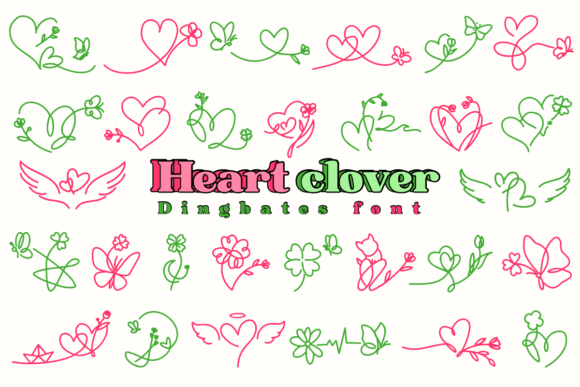
In the critical first few seconds of a site visit, the hero section must capture attention and establish tone. Heart Clover is a playful font made up of tiny symbols, combining heart and clover shapes that serve as excellent decorative anchors in these high-visibility areas. Instead of relying solely on heavy headline typography, designers can use these icons to create visual rhythm and balance. For instance, a landing page for a boutique florist or a wedding planning service can utilize these cute icons to frame the main value proposition. The result is a softer, more inviting entry point that encourages users to scroll further. By replacing standard bullet points or dividers with these thematic symbols, you create a cohesive narrative that feels custom-built rather than template-derived.
Enhancing Visual Hierarchy with Decorative Icons
Visual hierarchy guides the user’s eye through content, and Heart Clover offers a distinct method for achieving this without clutter. Because this font uses cute icons instead of letters and numbers, it functions best as a supporting element rather than primary copy. In a long-form blog post or a product description page, inserting these symbols as section breaks or accent markers helps scanability. Users process images faster than text; therefore, using a heart or clover symbol to highlight a key benefit or testimonial can increase engagement rates. This technique is particularly effective for brands targeting younger demographics or those in the lifestyle, wellness, and gift sectors, where emotional connection drives conversion.
Optimizing Heart Clover for Mobile Responsiveness
Responsive design demands that every element scales gracefully across devices, and Fonts used for decoration are no exception. When implementing Heart Clover on mobile screens, size and spacing become paramount. Since these are intricate symbols, they can lose definition if scaled down too aggressively. Best practice suggests using these dingbats at larger sizes for impact, such as in call-to-action buttons or featured image overlays. On smaller screens, ensure there is ample padding around each icon to prevent visual crowding. This maintains the clarity of the shape and ensures the "cute" aesthetic remains charming rather than messy. Testing these symbols against various background colors is also crucial; they perform exceptionally well on light, pastel backgrounds but may require stroke adjustments or color inversion for dark mode interfaces to retain their delicate details.
Strategic Font Pairing for Digital Brand Consistency
A standalone decorative font rarely carries a full brand identity; it thrives in partnership with robust typefaces. Heart Clover pairs ideally with clean, modern sans serif fonts for body copy. The contrast between the organic, symbolic nature of the hearts and clovers and the geometric stability of a sans serif creates a balanced professional look. For a more editorial or luxurious feel, consider pairing these Dingbats with a refined serif font. This combination works wonders for online stores selling artisanal goods or coaching websites that want to appear both approachable and authoritative. The key is to let Heart Clover handle the emotional accenting while the primary typography handles the informational load. This division of labor ensures that the website remains readable and accessible while still possessing a unique character.
Leveraging Cute Icons for Conversion-Focused Layouts
Conversion-focused layouts rely on trust and clarity, and Heart Clover can subtly influence both. In e-commerce environments, such as online stores or digital product sales pages, these symbols can be used to highlight guarantees, favorites, or special offers. For example, replacing a standard star rating with a heart icon from this font set can create a stronger emotional association with the product. Similarly, using clover shapes to denote "lucky deals" or limited-time offers adds a layer of gamification and urgency. Because Heart Clover is a playful font made up of tiny symbols, it reduces the perceived friction of a transaction by making the interface feel friendlier and less corporate. This psychological cue can lower bounce rates and encourage users to explore product categories more deeply.
Application in Social Media Graphics and Digital Ads
Beyond the website, consistent brand identity extends to social media graphics and digital ads. Fonts that offer versatile iconography are invaluable for creating cohesive campaign assets. Designers can use Heart Clover to create branded templates for Instagram stories, Pinterest pins, or Facebook ads. The uniformity of the heart and clover shapes ensures that even when messages change, the visual thread remains intact. This is particularly useful for content creators who need to produce high volumes of graphics quickly. By establishing a library of pre-designed elements using these cute icons, marketers can maintain brand recognition across platforms. The simplicity of the symbols ensures they remain legible even when viewed as thumbnails on mobile feeds, maximizing their impact in crowded social environments.
Technical Considerations for Webfont Implementation
From a technical standpoint, integrating Heart Clover into a web project requires attention to file formats and licensing. As with any premium font, ensuring you have the correct webfont licenses for commercial use is essential for client projects and online stores. Most modern Dingbats packages include WOFF and WOFF2 formats, which are optimized for fast loading times across browsers. When embedding these fonts, use CSS to define specific classes for the icons to prevent them from being indexed as text by search engines, which could confuse crawlers. Additionally, check for multilingual support if your site serves a global audience, although symbolic fonts like this are generally universal. Proper implementation ensures that the decorative elements enhance the user experience without compromising site performance or accessibility standards.